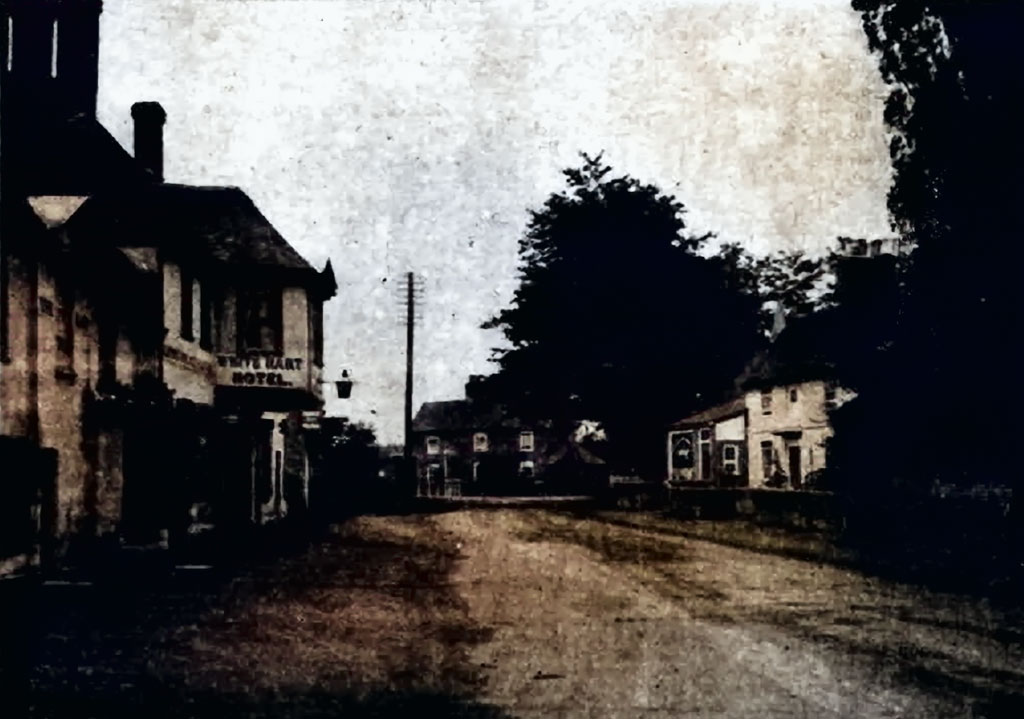
The Old White Hart Hotel at Hook
A Royal Past? Alleged Visits by Monarchs
Local tradition suggests that Queen Elizabeth I may have stayed at the White Hart during one of her royal progresses. Though historical evidence is lacking, it is known that she visited Silchester in 1601, and Hook, being a key stop along the route, could well have hosted the Queen and her entourage. If true, this would indicate that the White Hart predates the coaching era, possibly functioning as an important inn during the Tudor period.
Additionally, King George IV is said to have slept at the White Hart, reinforcing its reputation as an elite establishment used by nobility and royalty alike. These claims suggest that Hook’s significance as a travel stop extends far beyond the stagecoach era, placing the White Hart at the heart of the region’s transport history for centuries.
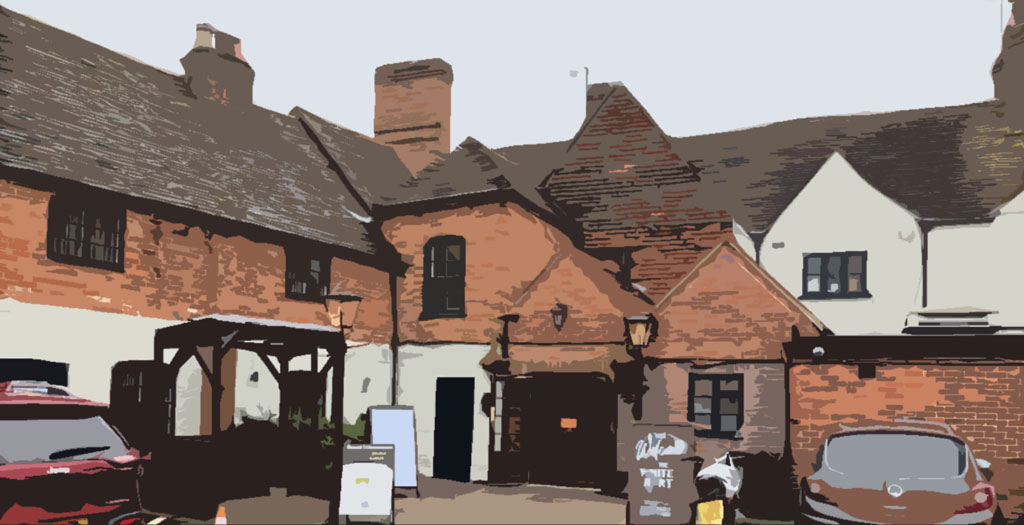
An Established Coaching Inn by 1764
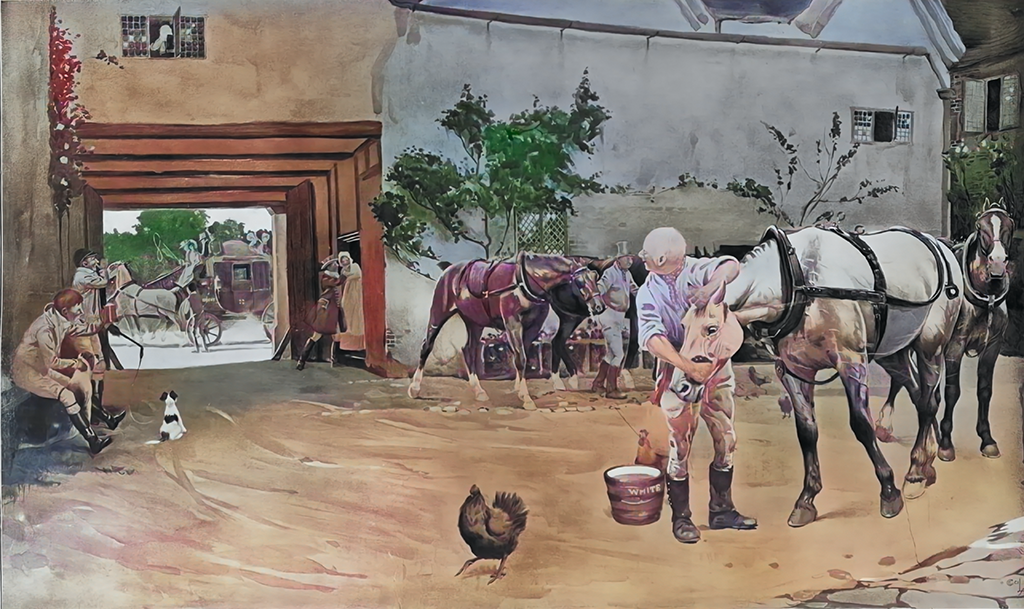
One of the earliest references to the White Hart in Hook appears in the Sherborne Mercury on Monday, 23 July 1764. This advertisement detailed a post-chaise relay system, offering the gentry and nobility a swift twelve-hour journey from London to Salisbury. The White Hart at Hook was listed as one of the key relay points on the Great Western Road, confirming its role in the formal stagecoach system decades before 1841.
Passengers traveling along this route would change horses at strategic stops, ensuring fresh teams for the demanding journey. The White Hart was part of this network, sandwiched between the White Hart at Bagshot and the Wheat Sheaf at Popham Lane, which further cements its place as an essential coaching stop.
A Large and Prestigious Inn in the 18th Century
A later advertisement from the Salisbury and Winchester Journal on Monday, 8 December 1788, provides an even more detailed picture of the White Hart’s size and significance. The inn was described as a “large and commodious edificeâ€, boasting 80 stables, spacious apartments, good cellars, a brewhouse, and large yards. It also had over ten acres of rich meadowland for grazing horses, reinforcing its importance as a coaching stop.
Additionally, the White Hart featured pleasure gardens, designed specifically for gentry and nobility. These well-maintained gardens provided a refined retreat where travellers could relax before continuing their journeys. This feature indicates that the White Hart was more than just a functional coaching inn—it was a high-class establishment catering to elite clientele.
The advertisement also emphasizes its location, stating that the White Hart was “very advantageously situated on the Great Western Road from London through Basingstoke to Salisbury, Winchester, Southampton, and Exeter.†The distances were noted: 5 miles from Basingstoke, 12 miles from Popham Lane, 40 miles from London, and 41 miles from Salisbury, precisely matching known coaching routes.
Hook: A Strategic Crossroads and Industrial Hub
Hook’s significance as a coaching stop was further amplified by its location at a key crossroads, where the London to Salisbury Road intersected with the Portsmouth to Reading Road. This crossroads—shaped like a hook, which may have influenced the town's name—made it a natural choice for travellers heading in multiple directions. The White Hart, situated at this junction, was well-positioned to serve both long-distance travellers and those moving between regional hubs.
The importance of Hook as a coaching hub may have also influenced the development of its industrial facilities, particularly the presence of a foundry. Given that the town’s existence appears to have clustered around the White Hart, it is plausible that the foundry was established to service the stagecoaches and their horses, providing repairs for wheels, axles, and other essential metal components. This would have made Hook not just a place for changing horses but also a maintenance stop for the coaching industry, reinforcing its role as a vital node in England’s transport network.
Hook’s Decline After the Coaching Era & The Fight for a Railway Station
With the rise of rail transport, the coaching trade declined, and Hook suffered economically. The White Hart, once a bustling coaching stop, saw reduced footfall, and the village itself struggled to adapt to the new transport landscape.
By 1852, Hook’s residents began campaigning for a railway station, recognizing that without it, the village risked further decline. However, the London and South Western Railway Company refused, citing cost concerns. The battle for a station lasted for decades. In 1879, a meeting at the White Hart brought together key landowners and business leaders, who argued that Hook was being unfairly bypassed.
Eventually, after years of petitions and legal battles, the railway station was finally built in 1883. This revival allowed Hook to modernise and regain its status as a transport hub—though this time for railway passengers rather than stagecoaches. The White Hart’s role also shifted, serving more long-term guests and adapting to new modes of travel.
The White Hart Today: Architecture & Features
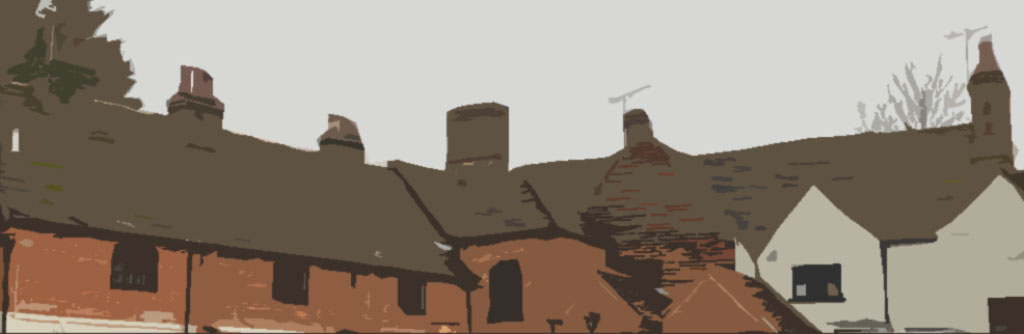
The White Hart retains much of its historic character, despite modern expansions. The main building is two storeys, with two distinct sections facing London Road. The southern section is the most visually striking, featuring a grand carriage entrance framed by two square Doric columns and pilasters, supporting a large first-floor bay window. Above, the hipped clay tile roof has three large chimneys, including a central stack with diagonally-set flues.
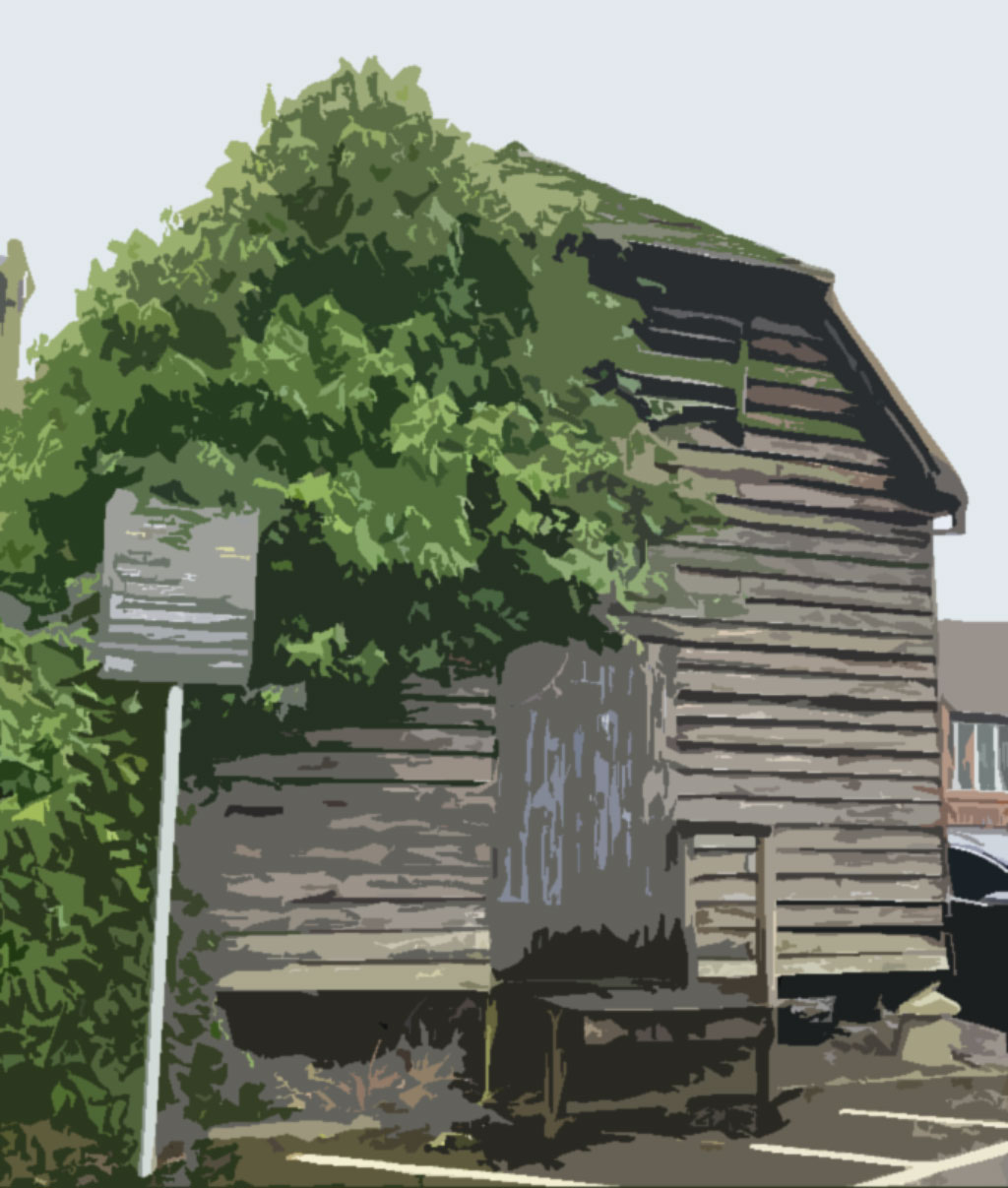
The northern section includes a prominent pediment and a ground-floor bay window with traditional sash windows. The rear courtyard, once used for coaching stables and auxiliary buildings, still contains a freestanding granary on staddle stones, an important surviving element of the coaching era. The yard layout and attached outbuildings remain largely intact, helping to preserve the historical feel of the inn.
Internally, much of the original timber framework is still visible, particularly low ceilings with exposed beams in the northern section. Although some areas have been modernized, the historic structure and layout of the inn remain evident, making it one of Hook’s most architecturally and historically significant buildings.
A Canal That Never Reached Hook or the Sea
In the late 18th century, plans were made to extend the Basingstoke Canal through Hook, with the aim of connecting Basingstoke to Winchester and ultimately to Southampton via the Itchen Navigation. However, a local landowner refused permission for the canal to pass through Hook, forcing engineers to take an alternative route.
Instead of a more level route, they were forced to construct the Greywell Tunnel, an expensive and technically challenging section of the canal. The enormous cost of this detour drained the canal company’s resources, and by the time construction reached Basingstoke, funds had run out. The canal never reached Winchester or Southampton, leaving it an incomplete and less effective transport route. This decision inadvertently sealed the fate of the canal, limiting its long-term viability and allowing railways to dominate transport in the region.
A Modern Transport Link: The M3 Motorway
In 1971, the construction of the M3 motorway cut through Hook Common, bringing a major transport link to the village. Junction 5 of the M3, located just south of Hook, provided direct road access to London, Basingstoke, and Southampton. This further strengthened Hook’s strategic importance as a transport hub, transitioning from coaching and rail to modern road travel. While the motorway improved connectivity, its construction also altered the landscape of Hook Common, reducing its once-extensive open space.
A Tenor, a Car, and the White Hart’s Unexpected Collision (1956)
At 3:30 AM on October 8, 1956, two men found themselves stranded after missing the last train from Basingstoke to London. One of them, Frederick Monblat, came up with a questionable solution—he decided to "borrow" his mother's unroadworthy car, despite its faulty brakes.
Monblat offered a lift to Hubert Moore, a West End tenor who performed under the stage name Gino Morretti.
Their journey, however, was short-lived. After just five miles, the car crashed into the White Hart in Hook, demolishing one of the pillars and becoming buried in rubble.
Remarkably, both men escaped unharmed. Monblat, however, was fined £18, and no doubt earned his mother’s wrath as well.